
'Alien: Earth' Is Terrified of its Own Queerness
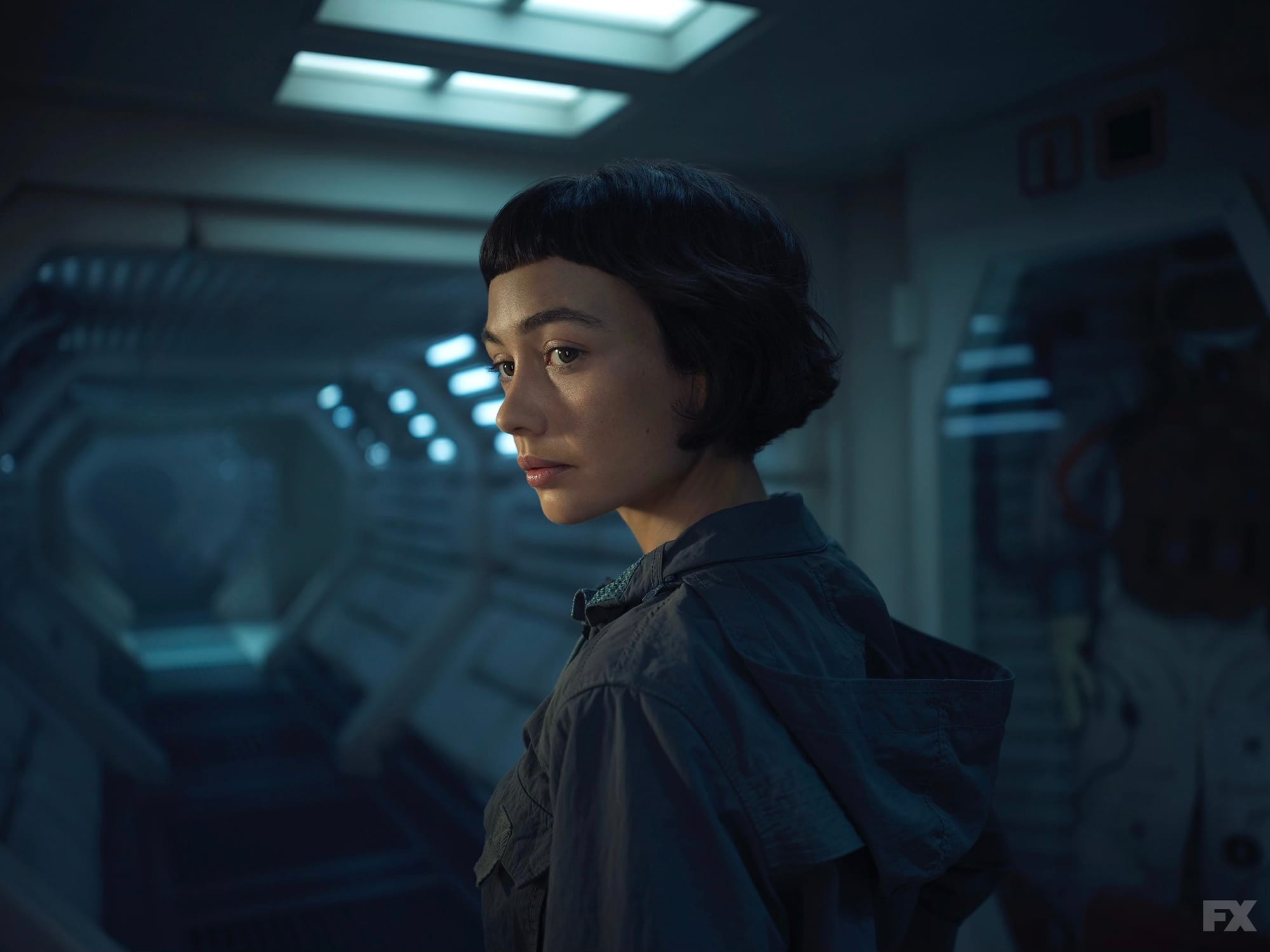
I wasn’t sure if I wanted to write about Alien: Earth one episode at a time or just wait until the season wraps. But four episodes in—halfway through its eight-episode run—the show feels like it’s finally planted its feet. It’s still a chaotic mess, sure, but there’s enough mess to dig into.
Here’s the thing about the Alien franchise: I’ll watch pretty much anything in this universe. I adore its best work and think about it constantly (Alien, Alien: Isolation) and found things to love in even its worst entries (Prometheus, Covenant, even the grimy industrial meat grinder that is Alien 3). I even liked Romulus, despite the fact that you can practically hear Fede Álvarez cranking his hog every time someone gets facehugger’d. These stories don’t need to be good for me to like ‘em—they just need to be weird, sticky, and wet.
Alien: Earth clears that bar, but it’s also as overstuffed and unwieldy as most Alien prequels tend to be. It covers a lot of ground in its first four episodes, and it has a habit of skimming right past its most interesting ideas. The Peter Pan stuff gets a lot of screen time. The sexless, sanitized transhumanism gets even more. And yet, it feels like no one in the writers’ room actually knows what kind of story they’re telling. In fact, it feels like there’s a story they’re deliberately not telling.
Transition with a Capital T
The core premise is built on classic cyberpunk tropes: no governments, just mega-corps. Five of them, all chasing immortality. The world is full of cyborgs and synthetics, but a new kind of being—hybrids, which are synthetic bodies loaded up with human minds—are on the horizon. They’re the new (super secret) hotness. They’re terminally ill kids whose minds have been uploaded into grownup robot bodies.
The main plot follows Wendy, the first hybrid: a 9-year-old girl, now in a grown woman’s body. She’s not alone. There’s a whole cohort of hybrid children, all uploaded into adult bodies. This process is called transition.
And look, I’m not asking for subtlety here. This is a series founded on an allegory for sexual assault so on the nose its titular monster literally has a giant phallus for a head. I just wanted someone to acknowledge the weight of that word.
Characters say it casually, clinically. But in 2025, speaking the word transition in the same sentence as child is inherently political. Alien: Earth really uses the word transition to describe a life-saving procedure that drops a child into a new body but does so seemingly by accident. I wasn’t looking for much, just some recognition that the choice of transition was a meaningful one.
Alien: Earth is preoccupied with philosophical questions we’ve seen come up in the Alien series before: what it means to be human, mortality. But there’s no exploration of embodiment. None of the hybrids discuss whether they feel right in their new form. We get an off hand comment about boobs, and later a disturbed hybrid is convinced she’s pregnant, but that’s it. Nobody even gets put in a body that differs in any meaningful way from the one they were born in. The word “transition” is used constantly—and yet the story avoids the actual transness of its own premise like it’s scared to touch it. It doesn’t just feel like a missed opportunity, it feels like cowardice.
Mr. Morrow and the Body Problem
If there’s one character who almost lands on something trans-coded, it’s Mr. Morrow—the company cyborg who survives the xenomorph outbreak and crash-lands back on Earth. He has this moment where he says he wishes he were moresynthetic, and laments that he’s “the worst parts of a man.” (I mean same.)
It’s tossed off. A one-liner, really. But it lingers. It hints that Morrow’s caught between states, part machine, part meat, and his discomfort in that liminal body feels like the closest the show comes to touching something real. That in-between-ness, that estrangement from your own physical form? C’mon you're so close! And Alien: Earth just leaves this whole vibe hanging.
Sci-fi has always been the best genre for talking about identity sideways. The Alien franchise, in particular, has flirted with gender, the complexity of having a human body, and reproduction in ways that are delightfully gross, and often brilliant. Alien: Earth clearly wants to join that tradition but it doesn’t seem willing to commit to any of its ideas.
We get transhumanism with no gender. Body horror without embodiment. A story about transition with no commentary on what gets transitioned, and why. It wants to gesture at themes—immortality, youth, bodily autonomy—but not actually explore them. It’s a show full of bodies that don’t fit, but that’s not the story we’re telling apparently.
And when it does try to root itself in metaphor, it leans on Peter Pan. It does it so often it almost feels like a bit. The Lost Boys. The bedtime stories. Mr. Morrow as Captain Hook. The xenomorph as the crocodile. Weirdo man-child terrified of his impending twink death kidnapping children. It’s like the show doesn’t trust us to get it unless it looks straight into camera and says “hey isn’t this Peter Pan story kinda like Peter Pan?” If you stripped all that away, the metaphor would still be legible and at least it wouldn’t bog down the rest of the story and setting like it is currently.
Afraid of its Own Shadow
There are two perfect Alien stories: Alien and Alien: Isolation. The rest only really work if you’re willing to ignore some glaring flaws, and that’s fine. I like my sci-fi messy. But Alien: Earth is frustrating because it feels afraid of itself. It flinches.
I’ve seen Legion and Fargo. I know Noah Hawley can take big swings and land them. Legion didn’t pull its punches—it was weird and bold and had a climactic fight scene that was essentially a psychic guitar duel. Hawley is capable of defying expectation in exciting ways. But Alien: Earth feels either confused or scared of its own ideas. And I can’t decide which is worse.
The real story is right there, just out of reach. Children controlled, shaped, and sacrificed by systems that say they know best. The parallels to gender, transition, autonomy, and selfhood aren’t subtle—they’re screaming. And yet instead of engaging with any of it, Alien: Earth retreats to basic bitch questions about AI personhood and ignores its most compelling ideas.